Tides of Change: Learning About Puget Sound Recovery
Each year, three watershed organizations come together in the last week of June to host “Summer Institute for Teachers” (SIFT), a three-day teacher training for 50 local educators. Although the idea of spending your first few days of summer break engaged in daylong professional development may seem less than relaxing, for these dedicated teachers, the experience has earned the nickname “teacher spa.” One teacher even remarked she “takes pictures every year to show my colleagues what they’re missing!”
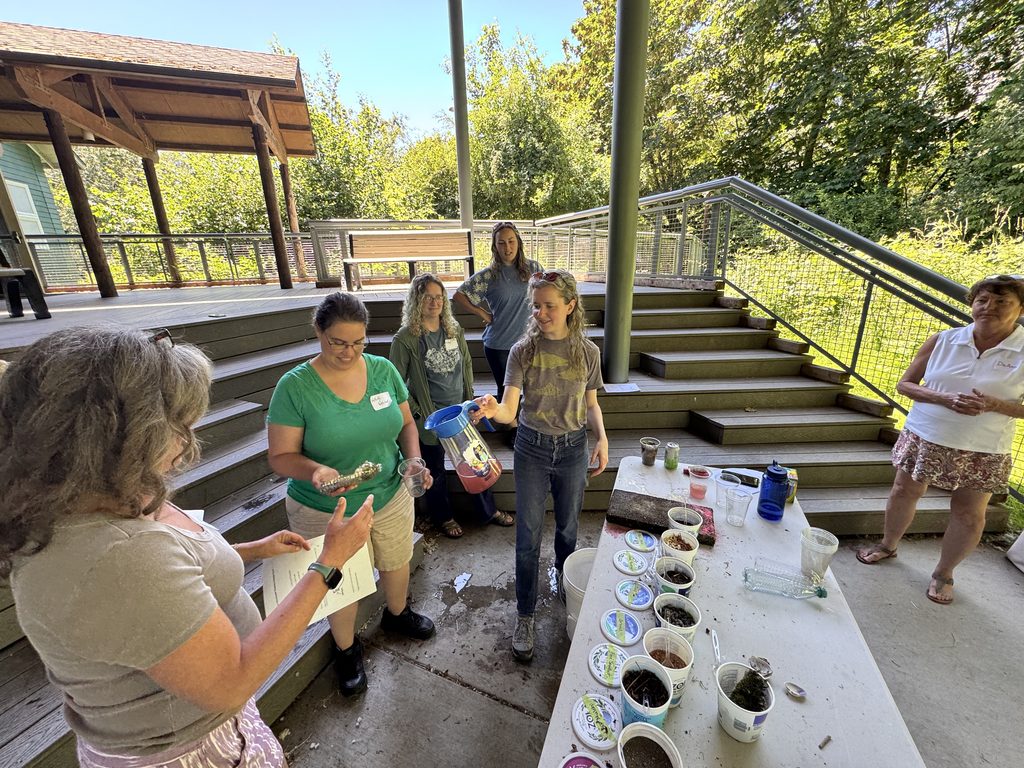
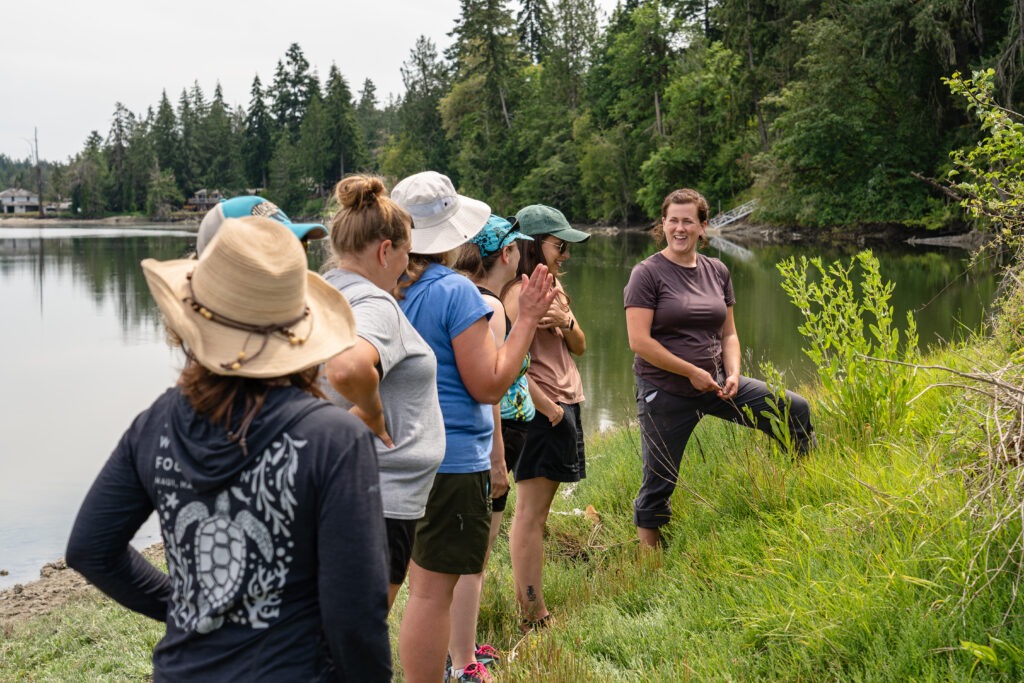
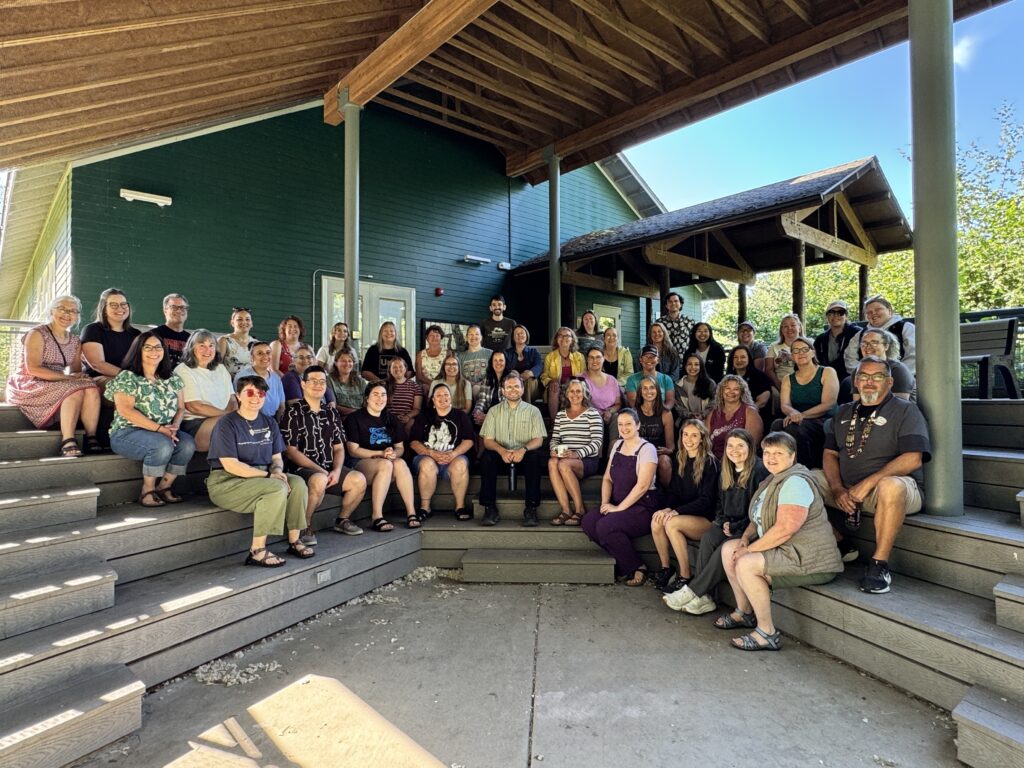
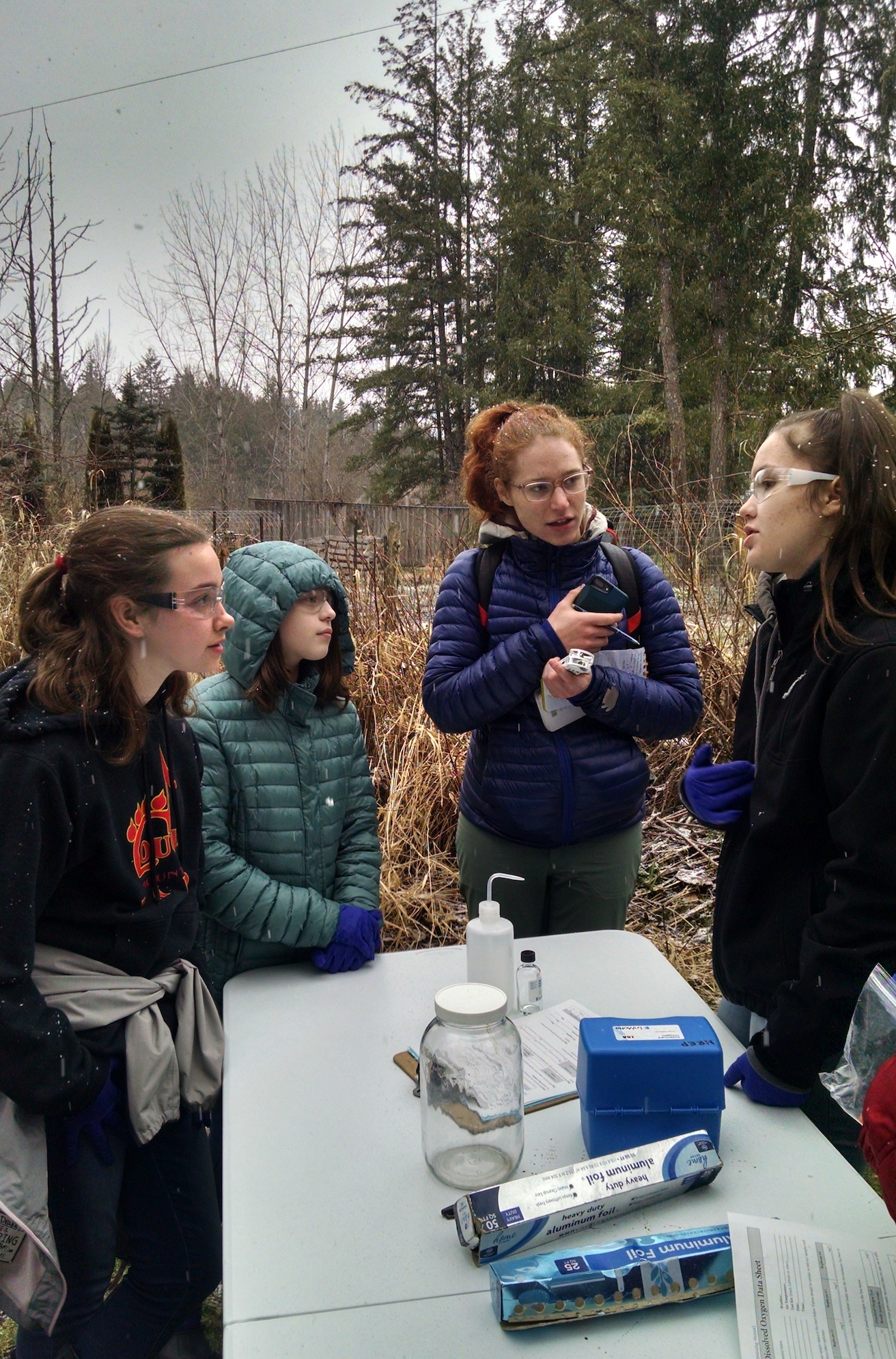
The Nisqually River Education Project, South Sound GREEN, and the Chehalis Basin Education Consortium have held this training annually for over 30 years. This year, it was held on June 22nd through the 24th at Billy Frank Jr. Nisqually National Wildlife Refuge. Teachers arrived eager for real-world, locally-relevant science training, and the opportunity to engage with this learning themselves. Over the three full days, teachers heard from local scientists, took field trips, and participated in hands-on activities they can bring back to their classroom. This year’s theme was “Tides of Change: Learning About Puget Sound Recovery,” with a focus on the restoration projects and people working hard to recover and enhance our local waters and ecosystems.
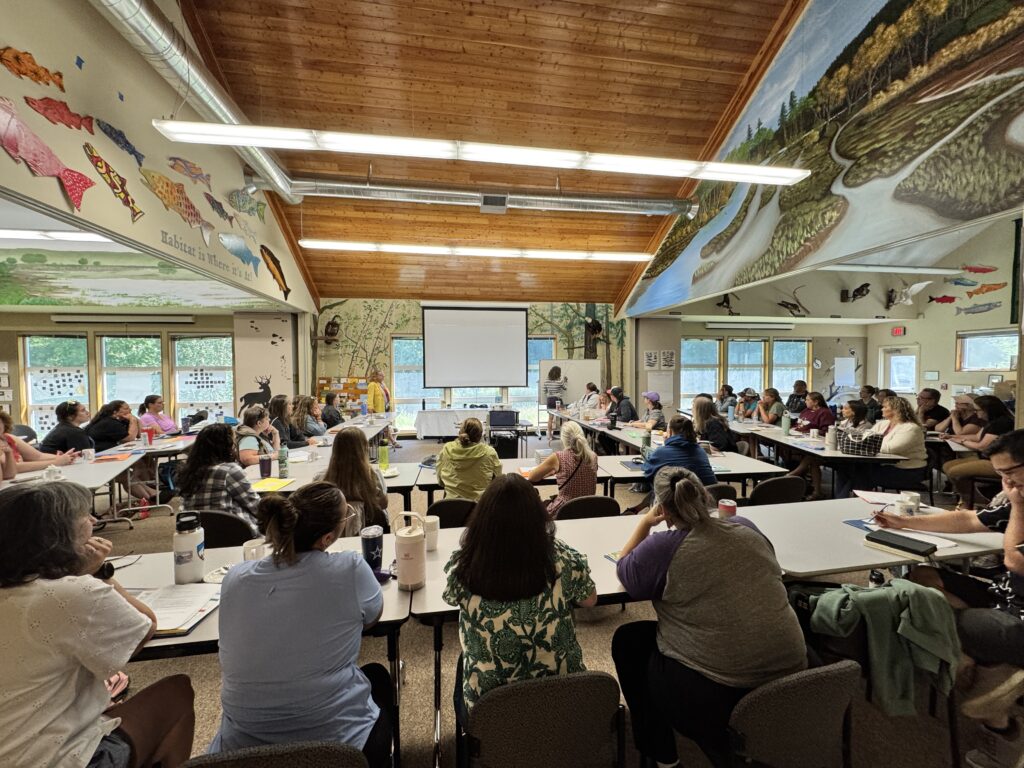
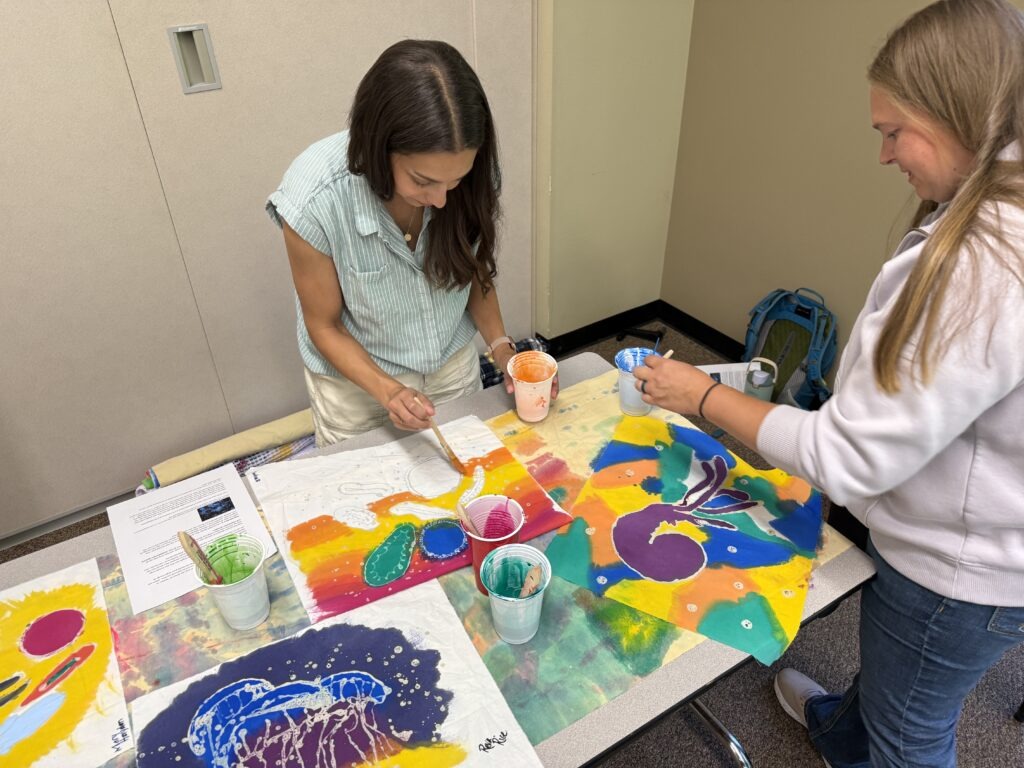
We kicked off the training with an opening by Hanford McCloud, Tribal Cultural Educator and Government Liaison with the Nisqually Indian Tribe. Next, keynote speaker Jodie Toft shared a sampling of the incredible restoration projects in our area that the Puget Sound Restoration Fund supports. In the afternoon, teachers chose between a variety of hands-on workshops, with topics ranging from discovering the hidden charm of the lamprey to building their own stormwater filtration system model.
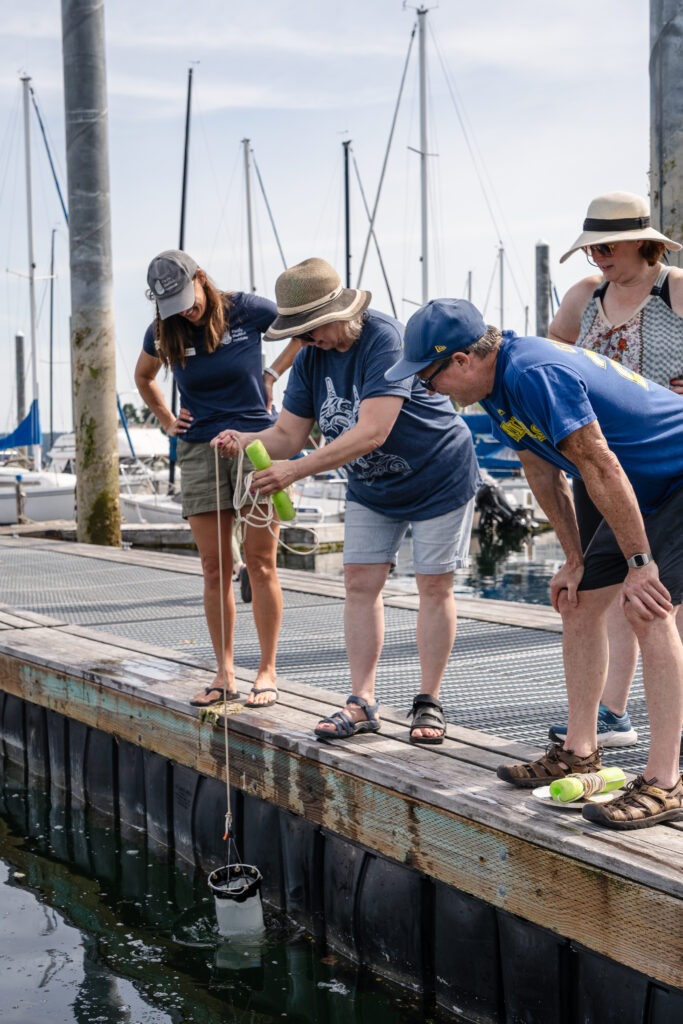
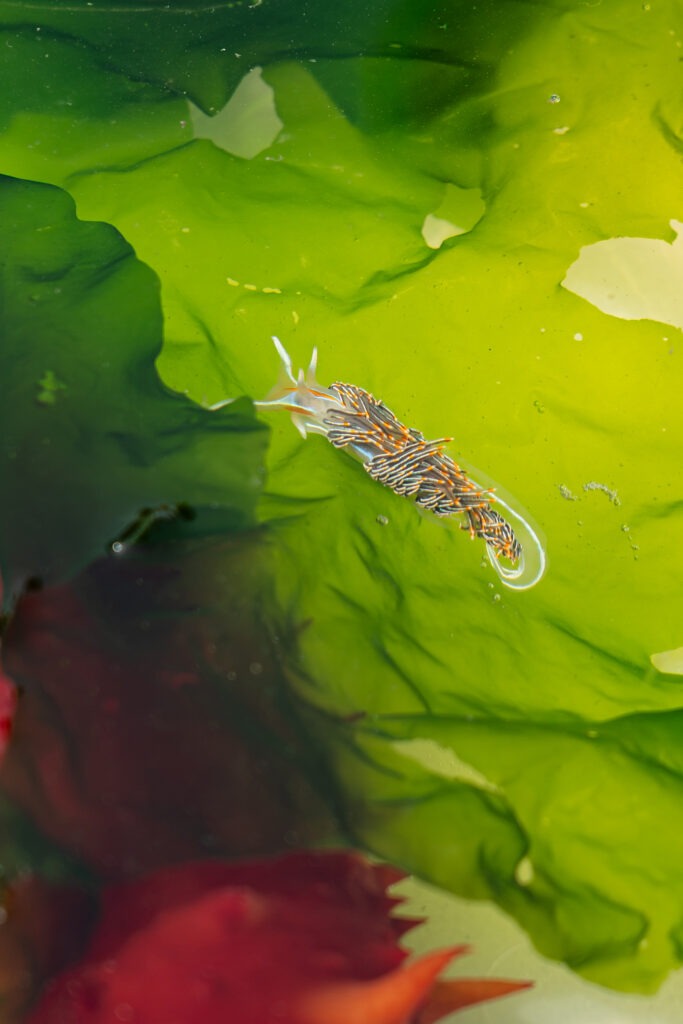
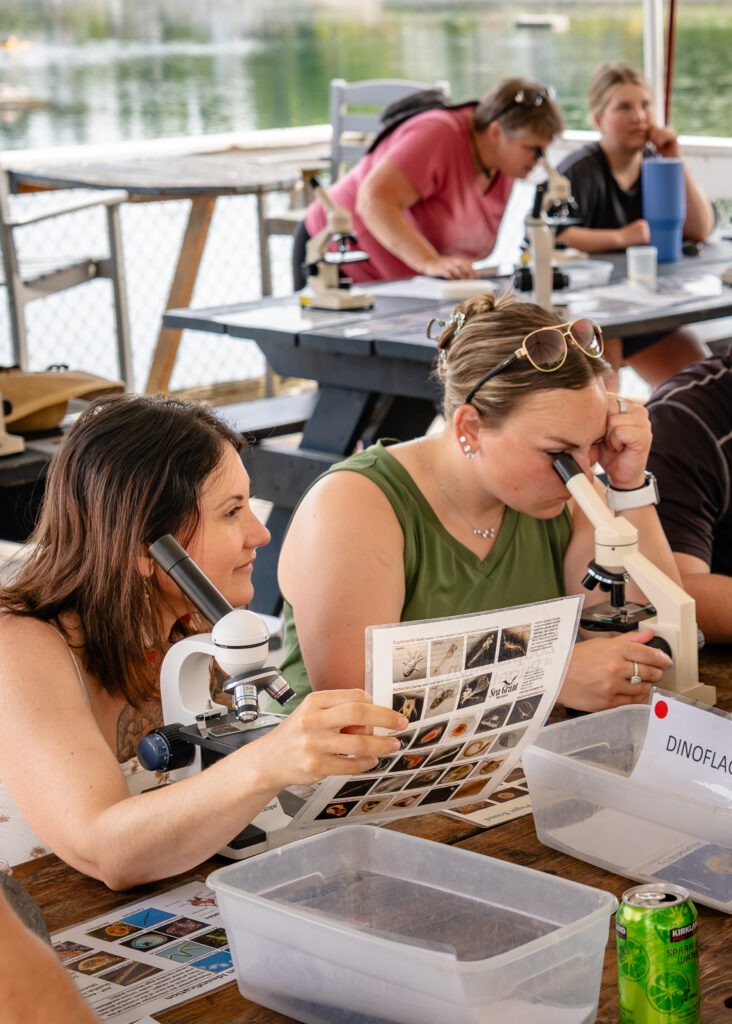
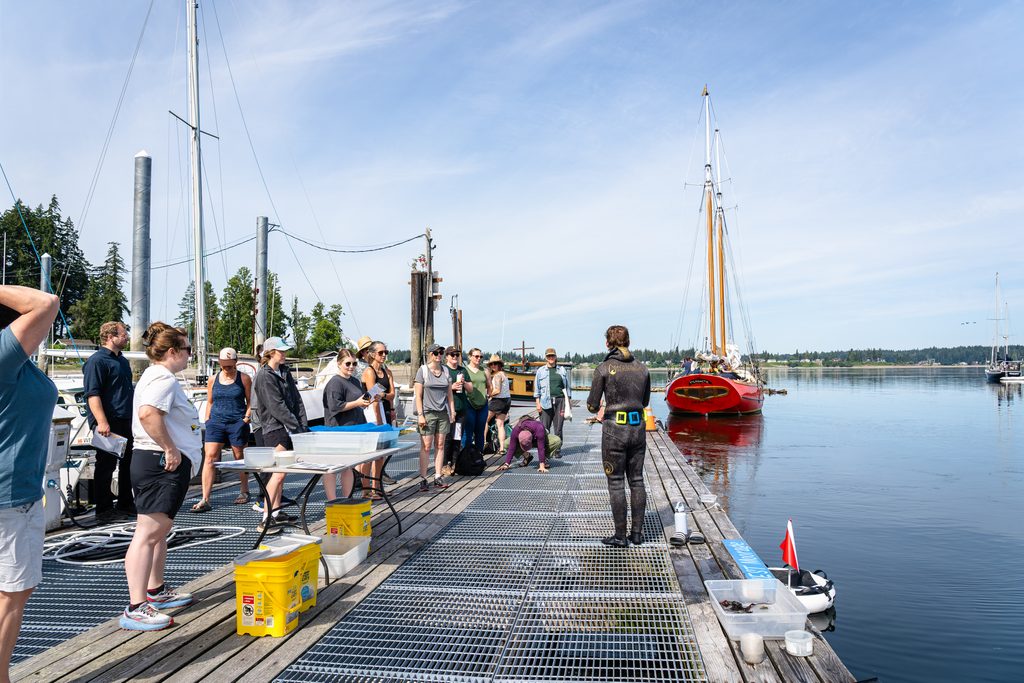
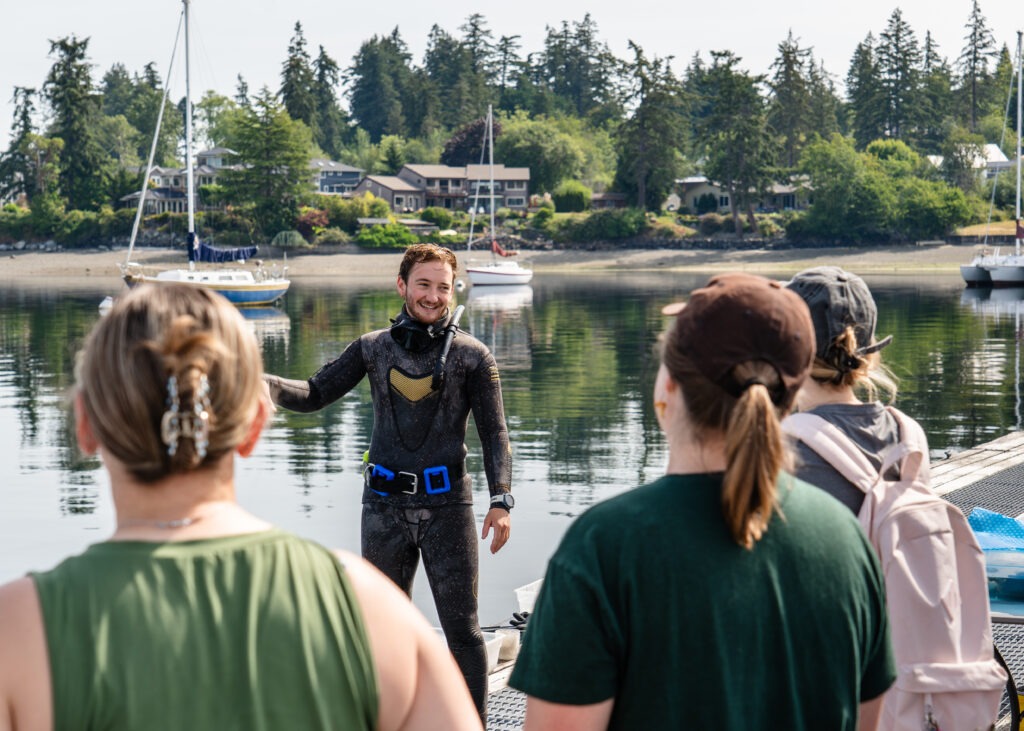
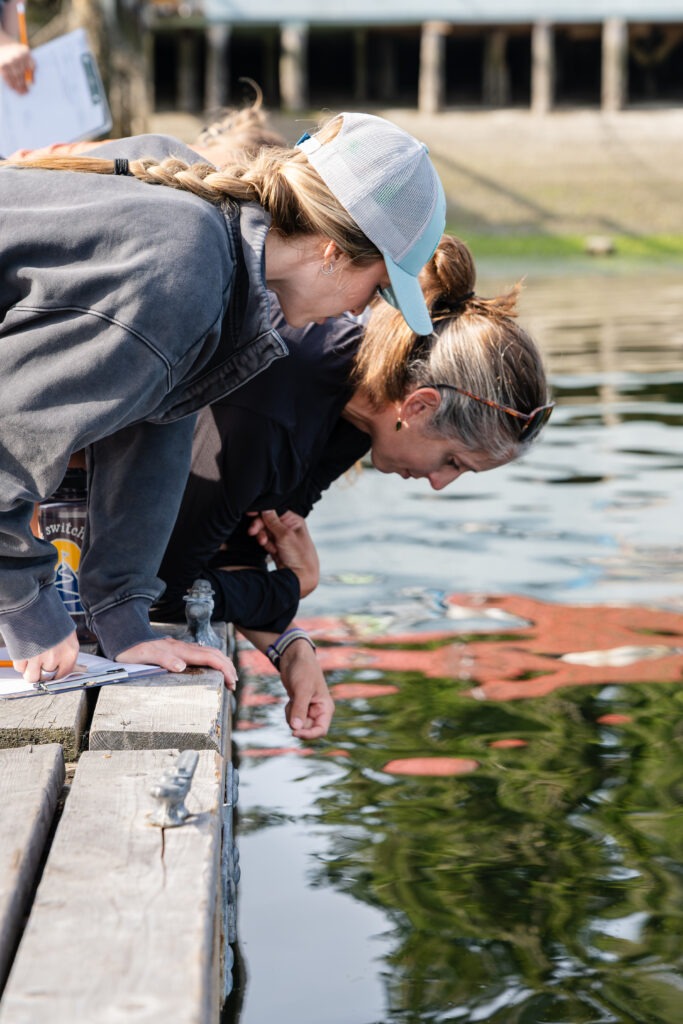
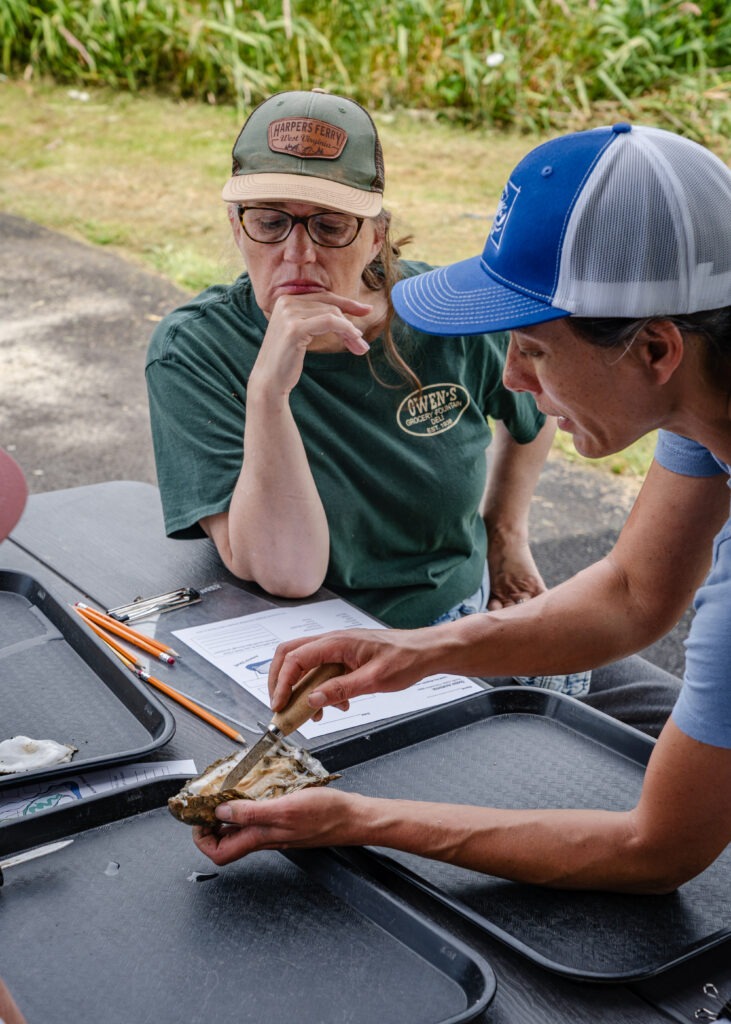
For this year’s field trip day, teachers first visited Boston Harbor Marina to learn about life under the water. Divers, sea slug experts, and plankton scientists were all on hand to share their knowledge and passion. Teachers got the chance to handle sea stars and crabs, pull plankton from the water with nets, and practice observing the incredible diversity of life that can be found right off the side of a dock. Next, we took teachers to Meyer’s Point Environmental Field Station where we dissected oysters, learned about cultural resources from the Nisqually Indian Tribe’s archaeologist, practiced forestry techniques, and prepared a salt marsh salad using ingredients we foraged on site! Each activity offered a way to tangibly experience the connection between humans and the health of Puget Sound.
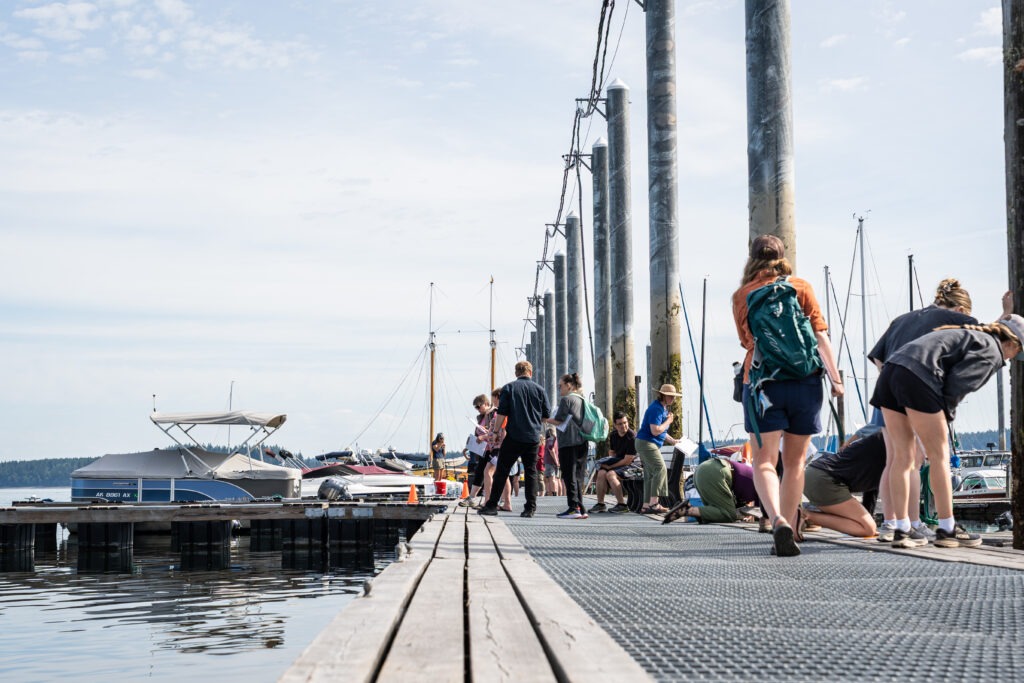

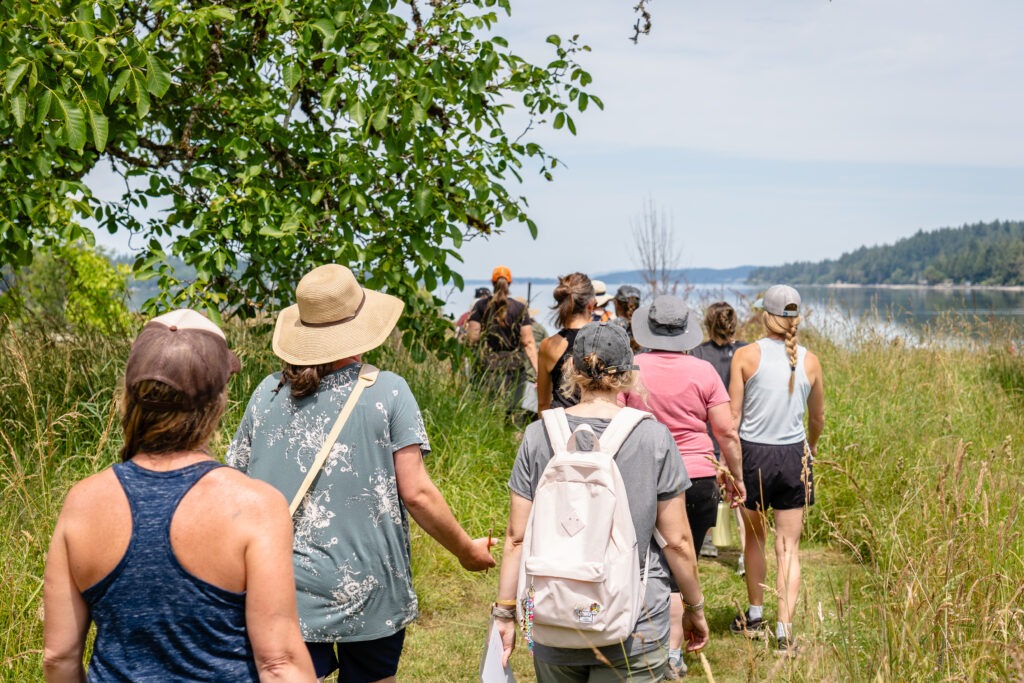
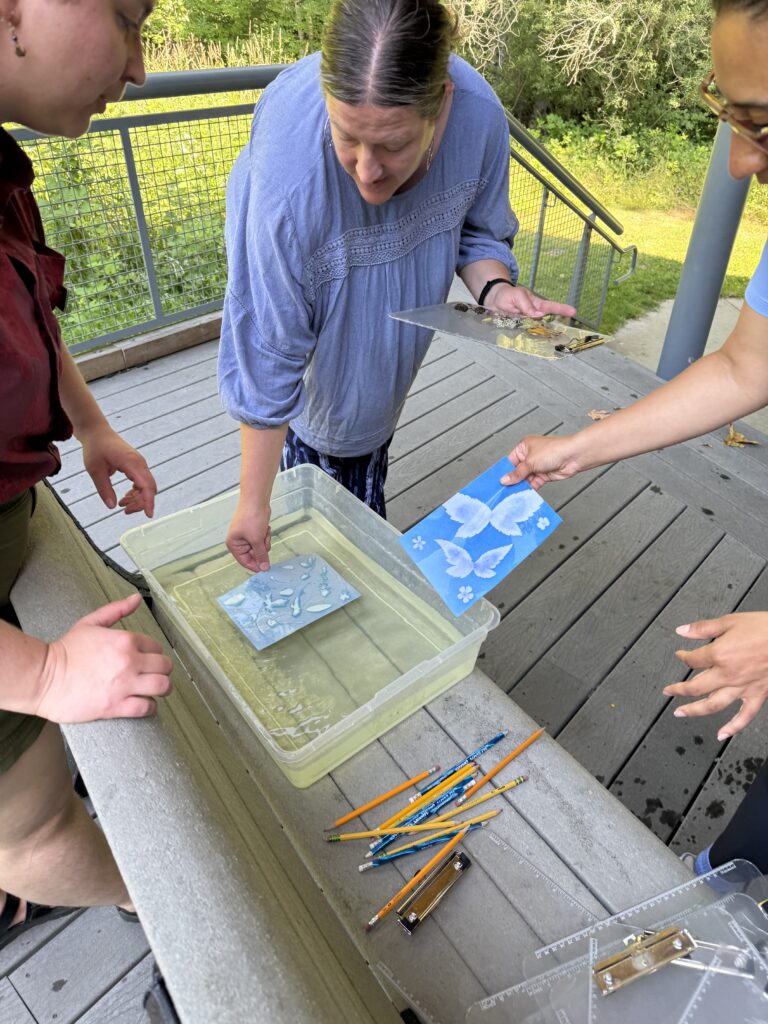
Of course, there could be no better venue to learn about local restoration than Billy Frank Jr. National Wildlife Refuge, home to the largest estuary restoration project in the Pacific Northwest. After another round of hands-on workshops about environmental journaling, killer whales, and cyanotype printing, the training concluded with a self-guided tour of the Refuge, highlighting the incredible ongoing restoration work taking place there.
At the end of these three days, teachers leave not only with new knowledge and teaching tools, but with firsthand experiences they can share with their students- and hopefully even more pictures to show their colleagues!
Special thanks to these organizations and individuals who made this year’s Summer Institute for Teachers possible:
- Nisqually Indian Tribe
- Puget Sound Restoration Fund
- Deschutes Estuary Restoration Team
- Thurston County
- Boston Harbor Marina
- Pacific Shellfish Institute
- Luan Roberts
- Janine Gates
- Gray McKenna
- Paula Craft
- Michelle Stevie
- Washington State University- Meyer’s Point Environmental Field Station
- WA Department of Natural Resources
- North Thurston Public Schools
- Nisqually Reach Nature Center
- Thurston Climate Action Team
- Billy Frank Jr. Nisqually National Wildlife Refuge