Posted July 10, 2025
“This is what the world needs more of.”
That’s what one teacher said at the close of this year’s Summer Institute for Teachers, a three-day gathering that has a tradition of inspiration, connection, and action for teachers participating in Nisqually River Education Project, South Sound GREEN, and Chehalis Basin Education Consortium’s programming.
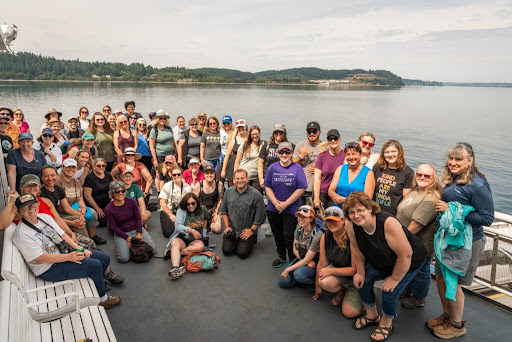
Each summer, right after school lets out, we bring together a vibrant network of educators from across the South Sound, including Clover Park, Bethel, Yelm, Eatonville, North Thurston, Olympia, Tumwater, Montesano, Rochester, and Rainier School Districts. This year, 50 educators joined us to explore outdoor learning and climate action, grounded in the places we live and teach.
This Year’s Theme: Climate Resilience in South Puget Sound
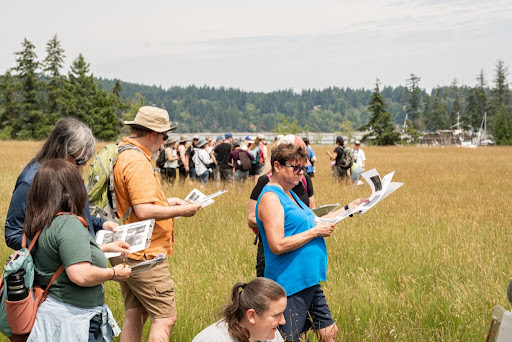
The 2025 theme, Climate Resilience: Ecology & Community in South Puget Sound, brought real-world environmental issues into focus through a local lens. Over three days, scientists, community leaders, and educators shared stories, led workshops, and guided field experiences that were all designed to help teachers bring environmental learning to life in their classrooms.
Keynote speaker Erik Neatherlin, Director of the Governor’s Office of Salmon Recovery, kicked things off with a powerful message. Through the story of salmon, a species that connects ecosystems and communities, Erik reminded us that resilience is already in our environment’s DNA. Despite nearly 200 years of negative impacts, there is hope when we give habitat the space to heal and thrive. Giving our environment space to heal and thrive at times means active restoration, and at times means just getting out of the way to let nature do what it does best.
Learning by Doing (and Getting Muddy)
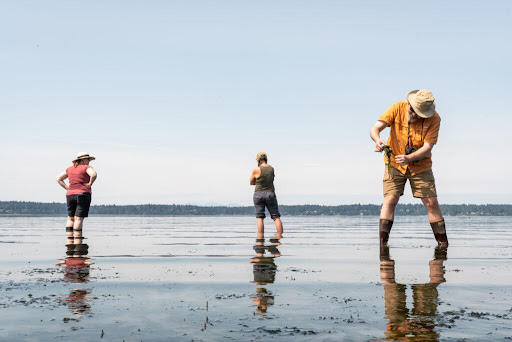
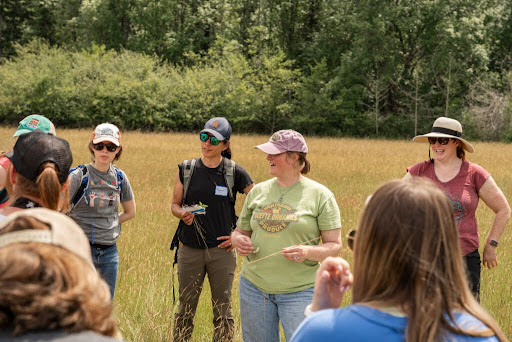
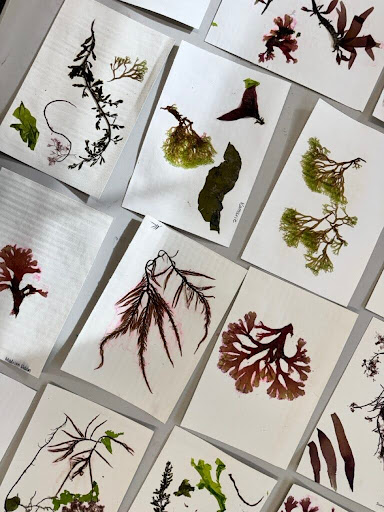
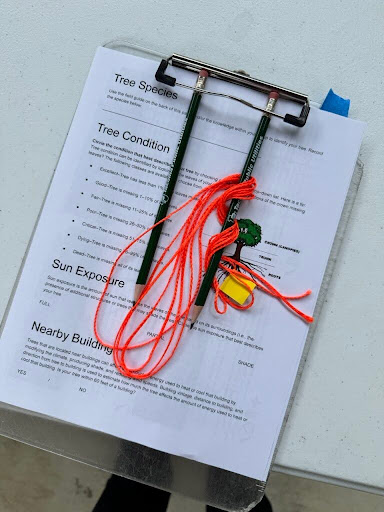
Teachers spent their days engaged in hands-on breakout sessions, exploring everything from sea level rise and king tides to creating pressed seaweed art and making healing salves from native plants. Each session provided tools, ideas, and resources that teachers can bring directly into their curriculum.
But one of the biggest highlights? The field trip.
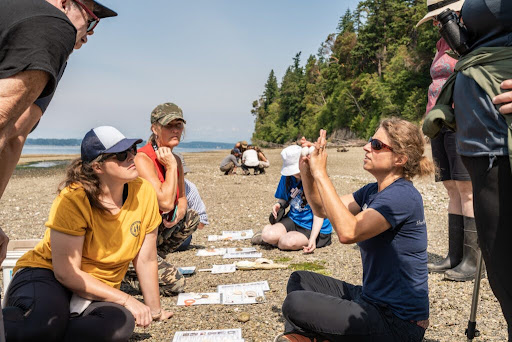
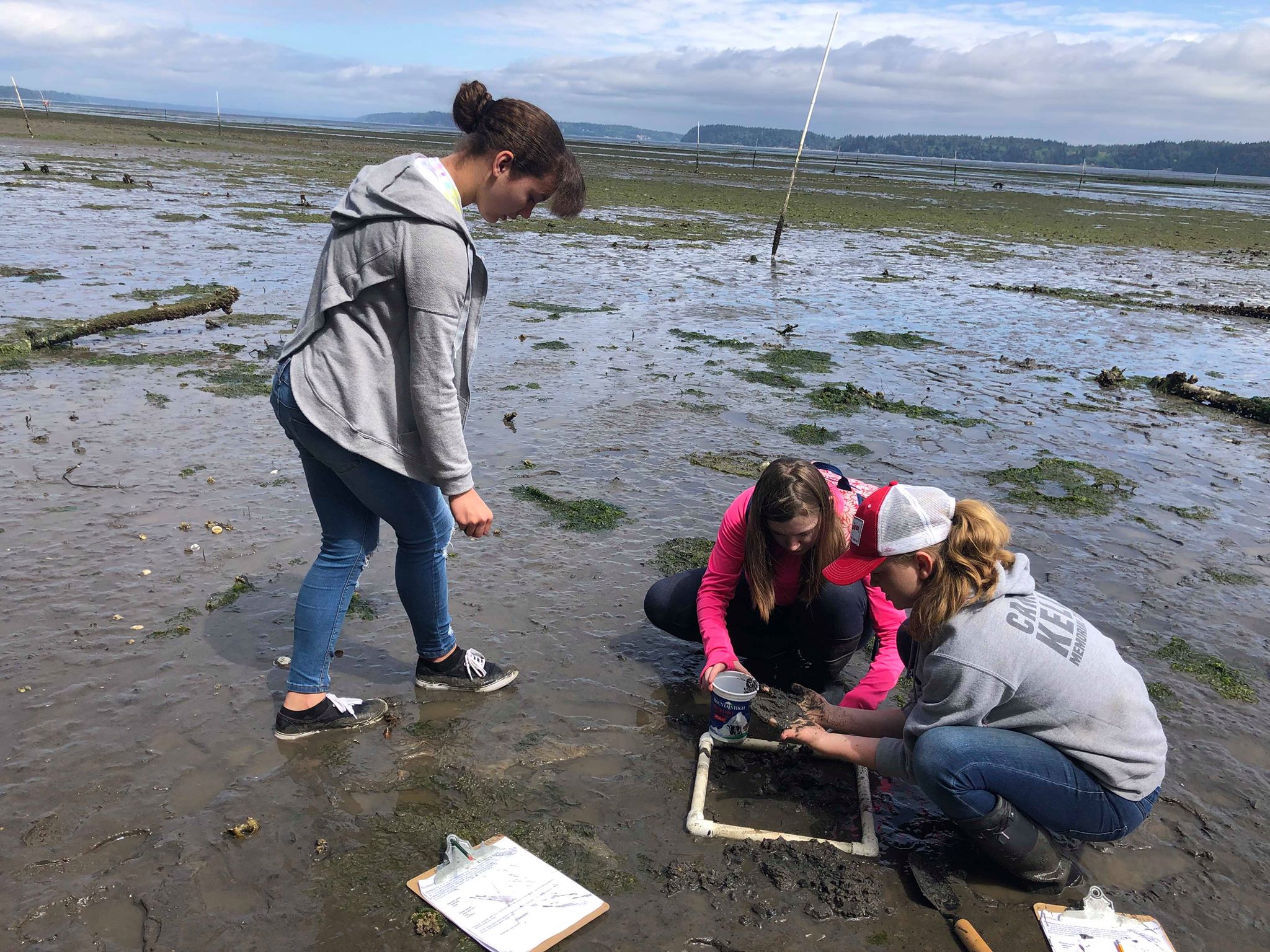
Usually, teachers are the ones planning logistics for their students’ outdoor learning adventures. But during Summer Institute, we flip the script. This year, we ferried all 50 educators out to Anderson Island for a low-tide exploration of the Puget Sound shoreline.
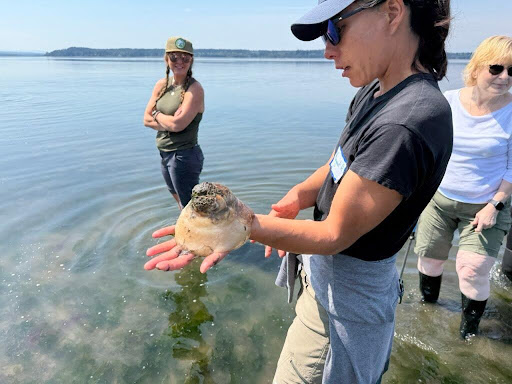
Equipped with muck boots and field guides, we arrived just as the tide pulled back to reveal a hidden world. Experts from the Nisqually Indian Tribe Shellfish Program, Pacific Shellfish Institute, and Salish Sea Guillemot Network were on hand to guide teachers through the intertidal zone.
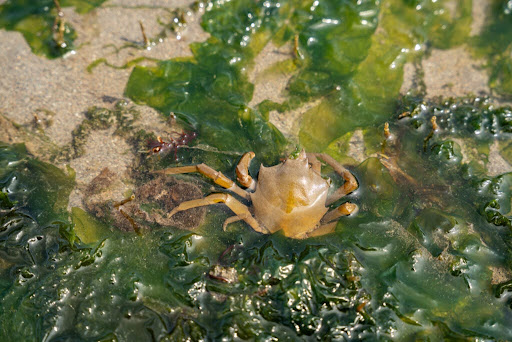
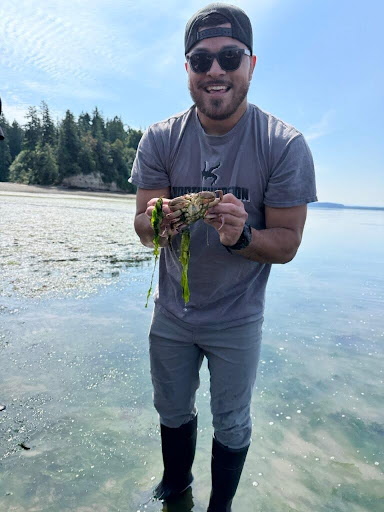
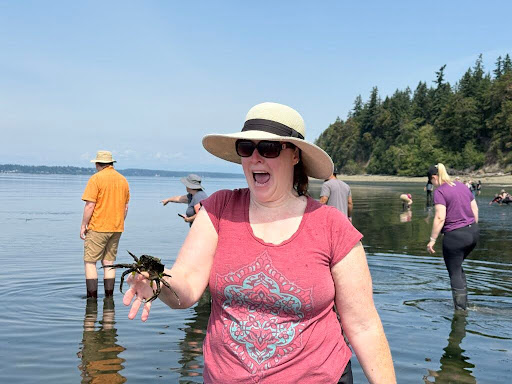
Above us, Pigeon Guillemots darted back and forth, headed to their cliffside burrows. Below, anemones, geoducks, moon snails, nudibranchs, forage fish, and other marine creatures were revealed. Teachers knelt in the sand and rocks, asking questions, sharing discoveries, and marveling at the diversity and resilience of life along the shore.
If there’s a recipe for awe, it might just be a pair of boots, a pocket field guide, and an hour on a quiet beach at low tide.
Building Emotional Resilience in the Classroom
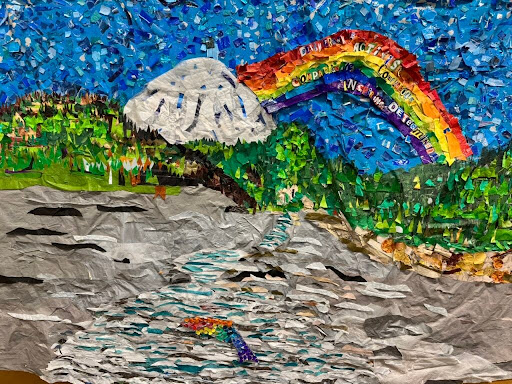
Our third and final day shifted focus from ecosystems to human systems. We know that teaching about climate change can stir up tough emotions in students: anxiety, fear, even hopelessness. That’s why Julia Pinnix, Visitors Services Manager for Nisqually National Wildlife Complex, led a powerful workshop on emotional resilience, helping educators create classroom communities that foster connection, hope, and a sense of agency.
Her strategies for integrating emotional and environmental learning struck a deep chord with participants. Many left not just with resources and lessons, but with renewed energy and purpose.
In Their Own Words: Teacher Reflections
Here’s what some of our 2025 participants had to say:
“The emotional resilience topics were huge to me. They helped me focus on small steps I can take to build resilient ecosystems and communities. Pairing emotional and climate resilience was exactly what I needed heading into summer.”
“This was the best and most engaging training I’ve ever attended. I loved all the hands-on breakout sessions and built connections with colleagues across districts”
“It was incredible to take a field trip ourselves. Exploring the beach with experts, asking questions about shellfish, birds, and native plants—I’ll be using so many of these resources in my classroom next year.”
“Getting updated on local environmental issues was so useful. The focus on both ecological and emotional resilience gave me hope.”
Thank You to Our Partners
Events like this don’t happen without deep collaboration. We’re grateful to all of our 2025 partners and guest presenters:
Nisqually Indian Tribe, WA State Governor’s Office of Salmon Recovery, Washington Sea Grant, Washington Office of Superintendent of Public Instruction, Salish Sea Guillemot Network, Salish Magazine, Washington Trails Association, North Thurston Public Schools, Cascadia Research Collective, Anderson Island Parks Commission, Nisqually Land Trust, Billy Frank Jr. Nisqually National Wildlife Refuge, Wild Grief, Thurston County Public Works, Firecraft Northwest, Beavers Northwest, and Salish Roots Farm.
Thank you for helping us empower the educators who will inspire the next generation of environmental stewards.